Facilitate a variety of exercises involving counting, matching, and patterns.
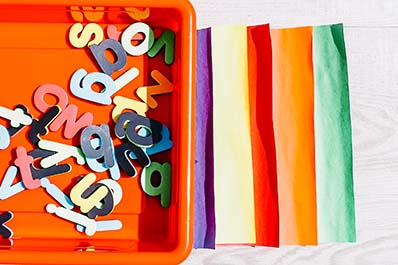
ABC magnets or puzzle pieces and construction paper in the colors of the letters.
Prepare the construction paper by writing the name of each color. Pull out each letter, ask your child what color the letter is, and then have them place it on the corresponding colored construction paper.
A long sheet of paper, yellow construction paper, markers, tape, and something circular for tracing.
Prepare by making 26 circles and drawing petals around each one. Add a letter (uppercase and optional lowercase) in each flower. Cut 26 circles from yellow construction paper and write the corresponding letters on them. Your toddler will then match each yellow circle to the letter on the paper. Tip: If 26 letters is too overwhelming, use fewer by folding the large paper in half.
Paper, construction paper, and a writing utensil.
I bought an art-easel paper roll and have found it so helpful not only for this activity but also when I need my toddler to be occupied. I took a few different colors of construction paper, cut them into slits, and made several shapes. I then drew the same shapes as tree outlines on the large paper. Start by asking your toddler to identify each shape, then show them how to match the cut-out shapes to the drawings on the paper.
Blue, green, and brown construction paper; scissors; glue; red and yellow stickers; and a black marker.
Cut out a brown tree trunk and green leaves. Glue these to the blue construction paper. Label red dot stickers with uppercase letters and yellow dot stickers with lowercase letters. Guide your toddler through a few examples. Tip: Turn this into a matching game using just uppercase letters if desired.
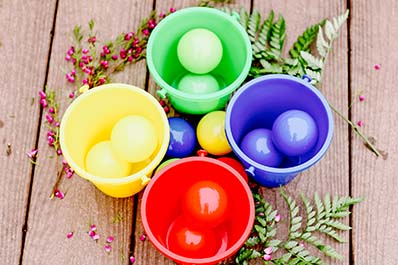
Colored balls and matching colored buckets.
Start with primary colors (red, yellow, blue) and gather 3–4 balls with matching buckets. Ask your toddler to place each ball in the bucket of the same color. If needed, model the behavior by demonstrating first. As their skill develops, increase or decrease the number of colors.
Anything of the same object type but in different sizes (e.g., dinosaurs, utensils, food).
Place the objects in a row and ask, "Which one is big?" and "Which one is small?" If incorrect, repeat several times, labeling the objects and varying their positions.
Colored construction paper and a writing utensil.
On one sheet, draw a caterpillar with numbers (1–5) in each circle. On another sheet, cut out circles with the same numbers. Have your toddler match the numbered circles to the caterpillar. You can also do this with letters or names!
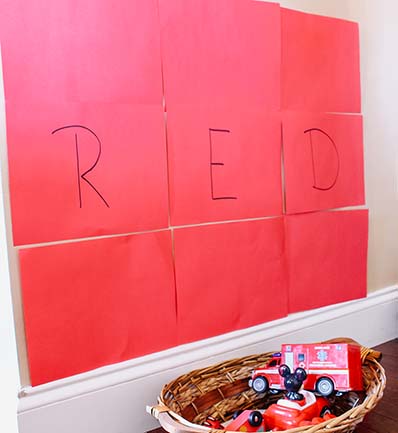
Colored construction paper, a basket, and household objects that match those colors.
Choose a weekly color for learning. Tape construction paper to a wall or board and write the color name. Each day, have your toddler find a household item of that color and place it in the basket. At week’s end, review each item and its color, then return items together.
Cardboard, plain stickers, clothespins, and fun stickers.
Cut a cardboard box into four panels and attach plain stickers. Label clothespins with numbers. Have your toddler count the stickers and then clip the corresponding clothespin. This activity also builds fine motor skills through pinching.
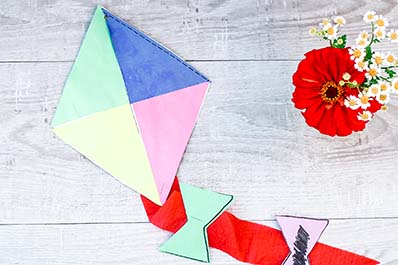
White, blue, red, yellow, and green construction paper; red streamers; scissors; stapler; writing utensil; and glue.
Cut a large white diamond and use it as a guide for smaller colored triangles. Glue the triangles onto the diamond, add paper bows, and staple a streamer tail. Ask your toddler to name the shapes and colors as they work.
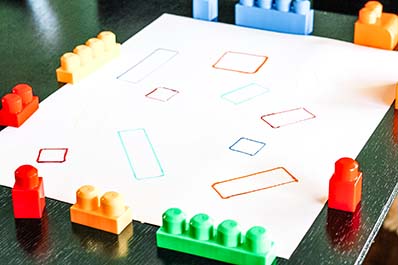
Large LEGO blocks, matching-color markers, and a large white sheet of paper.
Trace each LEGO block outline on paper using the same marker color. Lay out the traced shapes and have your toddler match the blocks to their outlines.
Construction paper, a writing utensil, and leaves.
This is a fantastic fall activity! Go on a nature walk to collect leaves. Trace each leaf on construction paper, starting with varying sizes to build confidence in matching.
A box, colored popsicle sticks, and matching construction paper.
Glue rows of colored paper across the box and cut slits. Have your toddler name each color and match the popsicle sticks to the paper slots.
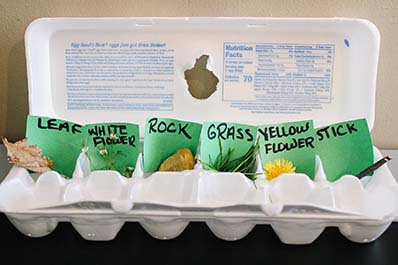
An egg carton and six items to find outdoors (grass, rocks, sticks, leaves, flowers, pine cones) or indoors (LEGO, stickers, cotton balls, crayons, animal figurines).
Place items in the carton and have your toddler name and find each one. Offer guidance on the first few items to demonstrate the game.
Household objects in at least two different colors (e.g., LEGO blocks, paper pieces, blocks).
Show a finished pattern (e.g., red, green, red, green). Discuss the colors, then guide your toddler in creating their own pattern. Practice until they understand.
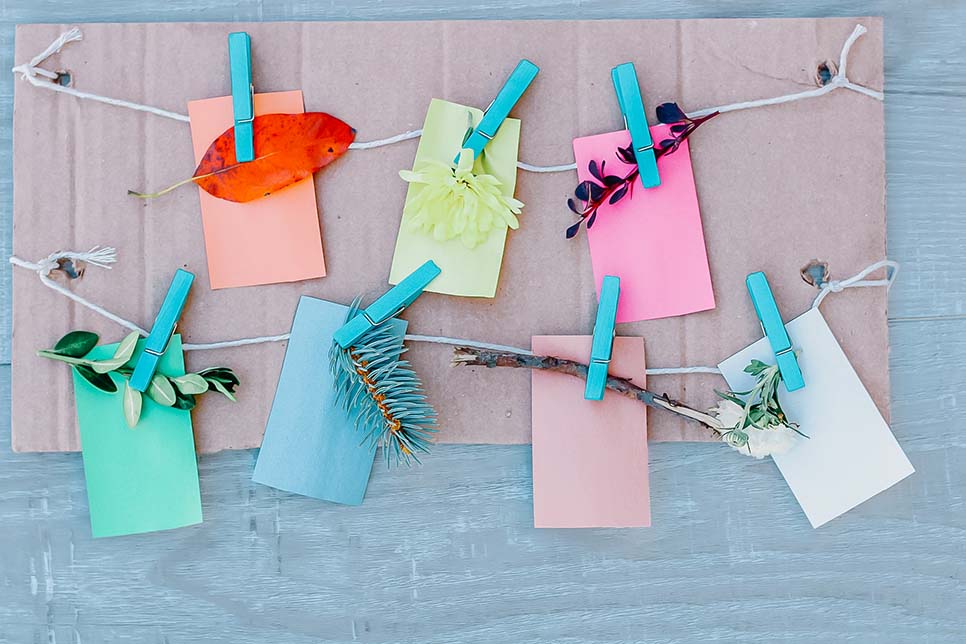
Cardboard, twine, clothespins, and colored paper.
Attach two rows of twine to cardboard. Cut colored paper squares and clip them to the twine. On a walk, have your toddler find outdoor items matching each paper color. Tip: Carry scissors—some items are hard to break apart!
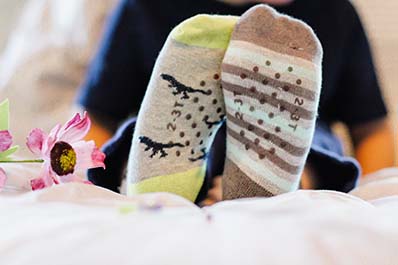
Three to five pairs of socks.
Line up one sock from each pair and ask your toddler to match them. Demonstrate as needed to help them understand.
Ten blank stickers, a writing utensil, and ten LEGO blocks of the same shape.
Label stickers 1–10 and place them on the blocks. Have your toddler stack blocks in numerical order. Depending on their skill set, you may provide a reference list of numbers.
Paper, matching-color markers, Magna Tiles, and a refrigerator.
Trace Magna tiles on paper using the tile colors. Color inside each tracing, tape the sheet to the refrigerator, and have your child match tiles by shape and color.
Paper, a marker, a ruler, and 55 stickers.
Write numbers 1–10 in boxes and have your little one place the corresponding number of stickers in each box.